By Eva Spangler, Staff Writer
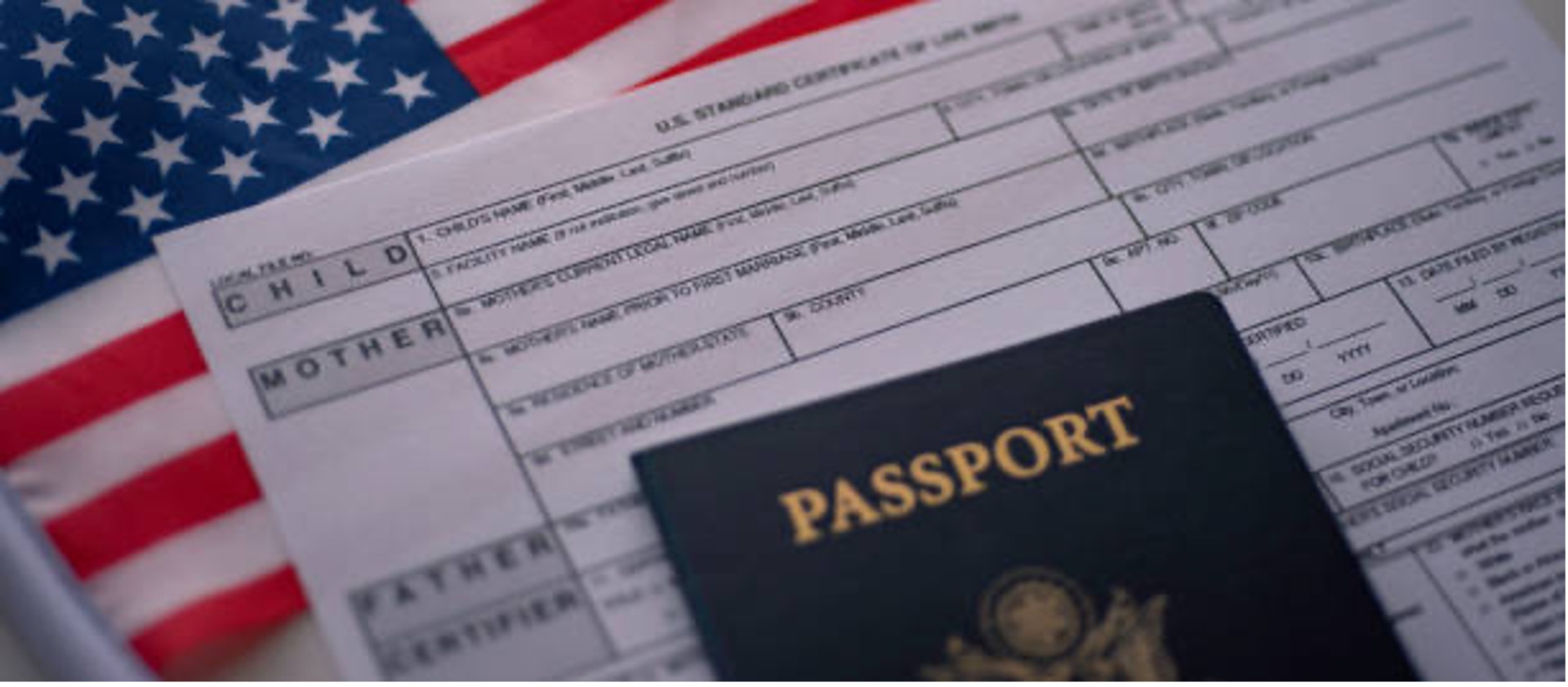
The Supreme Court of the United States is currently wrestling with its biggest challenge to birthright citizenship in over 150 years in Trump v. Barbara.[1] The dispute arises out of an Executive Order issued by President Trump on January 20, 2025.[2] The Executive Order attempts to limit citizenship for children born in the United States to noncitizen parents.[3]The case asks whether a president can narrow a rule that has long been understood as one of the clearest guarantees in the Constitution.[4] The answer to that question could affect immigration policy, family dynamics, and the scope of executive power for years to come.
In its simplest terms, birthright citizenship is the principle that individuals born in the United States are American citizens.[5] The right is enshrined in the Fourteenth Amendment of the United States Constitution, which states that “All persons born or naturalized in the United States, and subject to the jurisdiction thereof, are citizens of the United States and of the state wherein they reside.”[6] The Supreme Court confirmed the plain meaning of the Amendment in United States v. Wong Kim Ark, which held that children born in the United States are citizens, even if their parents are not citizens. [7]
The Trump administration argues that the Citizenship Clause should be read more narrowly, particularly in regard to children whose parents are in the country unlawfully or temporarily.[8] The administration specifically contends that the phrase “subject to the jurisdiction thereof” means more than simply being present in the United States.[9] They believe that, in addition to presence, a person must have allegiance to the government to be subject to its jurisdiction.[10] The administration argues that unlawful or temporary residents do not have such allegiance, and consequently, their children are not entitled to the privileges of citizenship. [11]
Opponents of the Executive Order say that the directive goes far beyond executive authority.[12] They argue that the 14thAmendment’s language is purposefully broad and that historical and legal precedent strongly support the concept of citizenship for nearly all children born on American soil.[13] Narrowing or limiting that bright line rule would unlawfully shrink a Constitutional guarantee.[14] They also argue their position from a practical standpoint, warning that allowing the concept of birthright citizenship to be narrowed would create uncertainty and instability for mixed-status families.[15]
What makes Trump v. Barbara even more important is that its outcome will not just affect immigration policy in America. Its decision could have a lasting impact on Constitutional interpretation and separation of powers.[16] If the Court rules in favor of the Trump administration, it could signal that long-settled constitutional understandings are more vulnerable to being overturned than many assumed. If the Court rejects the Executive Order, it will reinforce the idea that the narrowing of Constitutional guarantees by presidential action alone is impermissible.
The Supreme Court heard oral argument on the case on April 1, 2026, with a decision expected in late June or early July.[17] Whichever way the decision comes down, the case is likely to shape immigration law, executive power, and the meaning of the Fourteenth Amendment for years to come.
[1] https://www.supremecourt.gov/oral_arguments/audio/2025/25-365
[2] https://www.whitehouse.gov/presidential-actions/2025/01/protecting-the-meaning-and-value-of-american-citizenship/
[3] Id.
[4] https://www.supremecourt.gov/oral_arguments/audio/2025/25-365
[5] https://www.americanimmigrationcouncil.org/about-immigration/birthright-citizenship/
[6] https://www.senate.gov/about/origins-foundations/senate-and-constitution/constitution.htm#amdt_14_(1868)
[7] United States v. Wong Kim Ark, 164 U.S. 649 (1897)
[8] https://www.supremecourt.gov/oral_arguments/audio/2025/25-365
[9] Id.
[10] Id.
[11] Id.
[12] https://www.aclu.org/cases/barbara-v-donald-j-trump
[13] https://www.supremecourt.gov/oral_arguments/audio/2025/25-365
[14] Id.
[15] Id.
[16] https://www.jurist.org/features/2026/03/30/trump-v-barbara-the-supreme-court-case-that-could-redefine-birthright-citizenship/#:~:text=A%20ruling%20in%20this%20case,from%20their%20very%20first%20day?
[17] https://www.supremecourt.gov/oral_arguments/audio/2025/25-365