By Bianca Ortalano, Editor-in-Chief
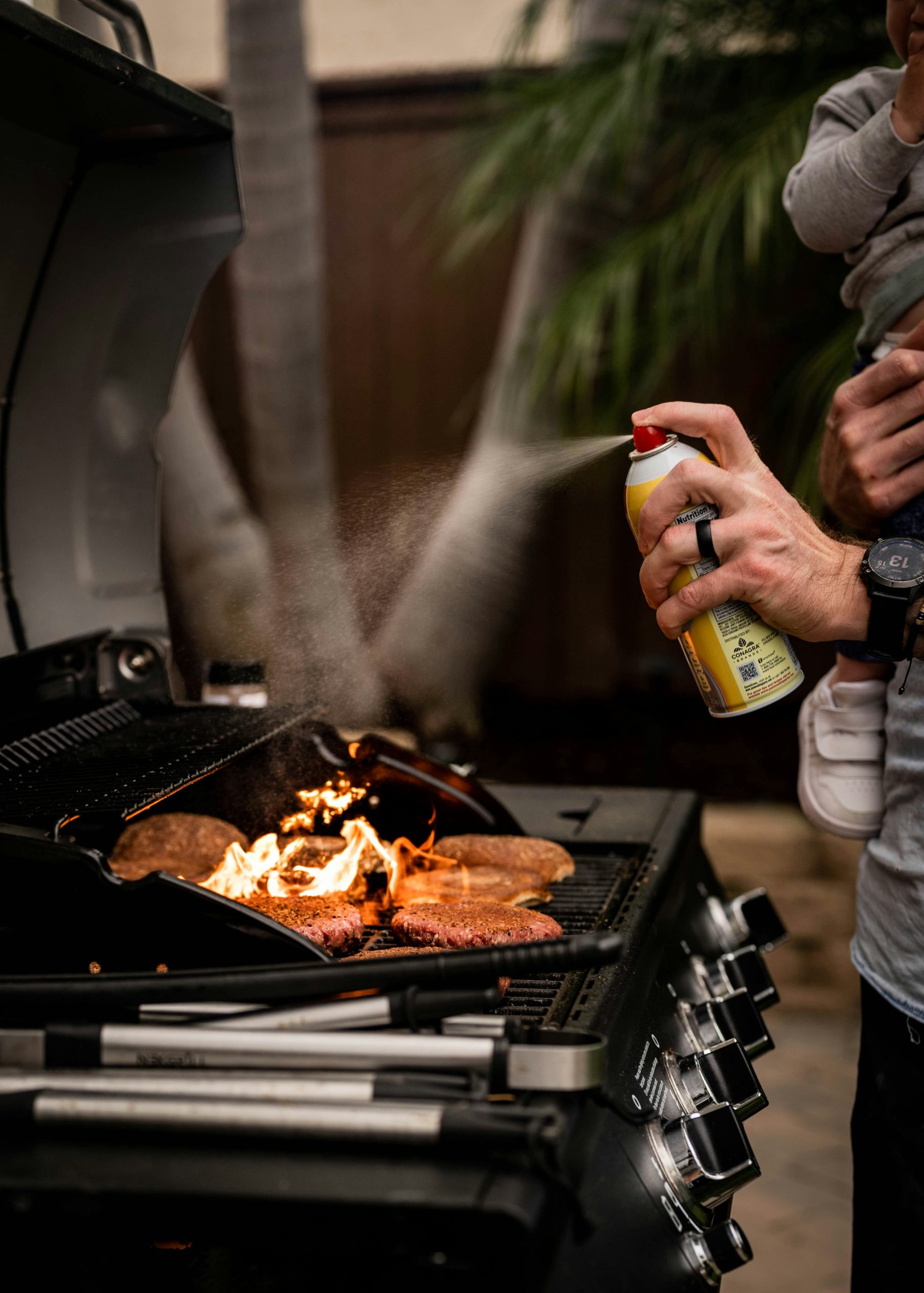
On September 28, 2020, Roland Esparza (“Esparza”) filed a civil complaint alleging that a certain butter-flavored cooking spray contained hazardous food flavoring components that caused Esparza to suffer from permanent injuries including, but not limited to, bronchiolitis obliterans; severe and progressive damage to the respiratory system; extreme shortness of breath; and significantly reduced life expectancy.1 Esparza explained that he has been using Pam Butter Cooking Spray (“Pam”) and Signature Select No Stick Butter Flavored Cooking Spray (“Signature Select,” referred to together herein with Pam as “Cooking Sprays”), at least two times a day since 1993.2 Esparza especially used the Cooking Sprays in a frying pan, heated on the stove.3 Esparza brought his complaint under five theories of law: Strict product liability – manufacturing defect; strict product liability – design defect; strict product liability – failure to warn; negligence; and breach of implied warranties.4
Under strict product liability, manufacturing defect, Esparza alleges that the defendants “knew, or should have known, that exposure to the Diacetyl, Acetyl Propionyl, and other food flavoring components and chemical fumes and vapors from the [Cooking Sprays] caused serious and life-threatening respiratory injuries, including Bronchiolitis Obliterans.”5 Esparza went on to state that the Cooking Sprays were defective by virtue of being produced in substandard conditions, the end product differed from the intended result, and that it departed from the intended design.6 Under his second cause of action, Esparza argued that the Cooking Sprays were “more dangerous than an ordinary consumer would expect” and was defective as the foreseeable risks outweighed the utility of the design and formulation; users of the Cooking Sprays would not be aware of the risks of harm; there were no performance or safety advantages to the design and formulation; and the defendants could feasibly use an alternative design or formulation.7
Esparza further claimed that defendants knew or should have known at all times during the manufacturing and retail process that prolonged use and exposure to Diacetyl, Acetyl Propionyl, and other food flavoring components contained in the Cooking Sprays could lead to serious injury or death, but failed to warn consumers or provide adequate instructions on safe use.8 In regard to the negligence cause of action, Esparza alleged that defendants had the duty to use reasonable care in the manufacturing and distribution of the Cooking Sprays but failed to do so through careless and negligent acts and omissions.9 Lastly, Esparza argued that “[b]y placing their products in the stream of commerce, [defendants] impliedly warranted that their products were reasonably fit for their intended uses[,]…were of merchantable quality[,]…were not defective[,]…would function as safely as ordinary users would expect[,]…and would not cause serious disease, harm, or death”; and that defendants breached these warranties due to the dangerous and defective nature of the Cooking Sprays.10
In December of 2020, defendants filed an answer alleging 33 different affirmative defenses to Esparza’s claims.11 These affirmative defenses include assumption of risk; no alternative design; statute of limitations; warnings; failure to mitigate; comparative fault; and unconstitutionality of punitive damages.12 Defendants argue that their Cooking Sprays contain “specific warnings regarding the consequences of its use” and that Esparza used the Cooking Sprays in disregard of the warnings.13 Explaining that Esparza’s right to recovery should be reduced by the amount of his own fault, which defendants claimed to be 100%.14 Similar to their argument under the “warnings” defense, defendants also argued that Esparza failed to mitigate his damages, which again should diminish his recovery.15 Throughout the litigation, several defendants in the case were either dismissed or elected to settle. Now, six years later with just one defendant left, after thousands of court filings and weeks of testimony—but only an hour and a half of deliberations—the jury finally returned a verdict awarding Esparza $25,000,000 in compensatory damages and assigning all responsibility to defendant, Conagra.16 The jury agreed with every one of Esparza’s claims and declined to find Conagra’s claim that Esparza’s own negligence contributed to his harm persuasive.17
Esparza presented evidence that Conagra was aware that diacetyl could become more volatile when sprayed out of the can and heated; alleging that Conagra “required any employee who sprayed a can of Pam [] to undergo training on the dangers of diacetyl and have breathing protections.”18 The U.S. Food and Drug Administration has classified diacetyl as “generally recognized as safe” for ingestion in food, however ingestion is not the same as inhalation.19 But what exactly is diacetyl? Diacetyl is a “flavor compound produced by certain lactic acid bacteria” and can be found in fermented foods such as beer and wine.20 Diacetyl can also be found in tobacco and vaping products.21 Acetyl propionyl, the second chemical Esparza claimed to have contributed to his injuries, is a substitute for diacetyl and is commonly found in microwave popcorn and flavored coffee.22 Both compounds have been found to be associated with the same lung disease that Esparza suffers from—bronchiolitis obliterans.23 The National Institute for Occupational Safety and Health notes that the first case of obliterative bronchiolitis in a food production employee likely occurred in 1985 in a facility making flavorings for the baking industry which used diacetyl as an ingredient.24
Despite Conagra’s claims that it was unaware of the risks of diacetyl exposure to consumers, the brand has been reformulating its sprays since 2009, moving away from diacetyl for all of its products.25 To this point, the jury was presented with evidence that Conagra was aware that diacetyl could become more volatile when aerosolized or heated.26 Conagra’s expert testified that the brand could not have made formulations for Pam without diacetyl before 2009 as alternatives were not available.27 However, as previously stated, Conagra was confronted with evidence that it had actual knowledge of the dangers of diacetyl by 2004 and before 2007 based on the training it required of its employees who would be spraying Pam.28
So why are Cooking Sprays even used if they presently contain, or have previously contained, these harmful ingredients? Cooking Sprays are often used to cut back on calories and fat.29 These sprays also tend to provide lighter coverage of oil on the pan so that food remains non-stick.30 Yet, these sprays are not free of calories and fat, and it is common for the “cans to be filled with additives like soy lecithin…and propellants like nitric oxide.”31 Whether you use a spray to keep down the calories or real butter to avoid additives, there are pros and cons to both options. Consumers are encouraged to read the ingredients lists on food and research what some of the artificial flavorings may actually be. It is important to recognize that “lower calorie” does not always equate to “healthy.” And the label you see on the package may not be as trustworthy as it appears.32
- Compl. for Damages ¶ 19, Sept. 28, 2020. ↩︎
- Id. at ¶ 14. ↩︎
- Id. ↩︎
- Id. at 1. ↩︎
- Id. at ¶ 25. ↩︎
- Id. at ¶ 26. ↩︎
- Compl. for Damages ¶ 32, Sept. 28, 2020. ↩︎
- Id. at ¶¶ 42-43. ↩︎
- Id. at ¶¶ 52-53. ↩︎
- Id. at ¶¶ 63-64. ↩︎
- Answer of Defendants Conagra Brands, Inc. and the Vons Companies, Inc. to Plaintiff’s Compl. December 18, 2020. ↩︎
- Id. ↩︎
- Id. at 5. ↩︎
- Id. ↩︎
- Id. ↩︎
- Special Verdict Form ¶¶ 14-15, Feb. 4, 2026. ↩︎
- Id. at ¶ 12. ↩︎
- Gina Kim, Conagra Owes $25M For Man’s Lung Disease From Pam Spray, Law360 (Feb. 5, 2026), https://www.law360.com/articles/2438765?from_lnh=true ↩︎
- Michigan State University, Community Request – Diacetyl, Michigan State University (Mar. 31, 2025), https://cris.msu.edu/news/community-request/community-request-diacetyl/#:~:text=Diacetyl%20is%20safe%20for%20ingesting,as%20a%20food%20ingredient%20only. ↩︎
- Annette R. Iannucci & Janet M. Carter, Toxicity of Diacetyl and Structurally Related Flavoring Agents, ScienceDirect (2024), https://www.sciencedirect.com/topics/pharmacology-toxicology-and-pharmaceutical-science/diacetyl ↩︎
- Id. ↩︎
- National Institute for Occupational Safety and Health, Flavorings and Lung Disease, CDC (Feb. 24, 2025), https://www.cdc.gov/niosh/flavoring-related-lung-disease/about/index.html#:~:text=Overview,mix%2C%20and%20flavored%20coffee%20industries ↩︎
- Id.; Gina Kim, Conagra Owes $25M For Man’s Lung Disease From Pam Spray, Law360 (Feb. 5, 2026), https://www.law360.com/articles/2438765?from_lnh=true ↩︎
- National Institute for Occupational Safety and Health, Flavorings and Lung Disease, CDC (Feb. 24, 2025), https://www.cdc.gov/niosh/flavoring-related-lung-disease/about/index.html#:~:text=Overview,mix%2C%20and%20flavored%20coffee%20industries ↩︎
- Gina Kim, Conagra Owes $25M For Man’s Lung Disease From Pam Spray, Law360 (Feb. 5, 2026), https://www.law360.com/articles/2438765?from_lnh=true ↩︎
- Id. ↩︎
- Id. ↩︎
- Id. ↩︎
- Dana Angelo White, Is It Healthy: Cooking Spray, Food Network’s Healthy Eats (May 2013), https://www.foodnetwork.com/healthyeats/2013/05/is-it-healthy-cooking-spray ↩︎
- Id. ↩︎
- Id. ↩︎
- Bianca Ortalano, Decoding Food Labels: Unraveling Regulations and Real Meanings, JurisMagazine (April 16, 2024) https://sites.law.duq.edu/juris/2024/04/16/decoding-food-labels-unraveling-regulations-and-real-meanings/ ↩︎