By: Sofia Bennett, Staff Writer
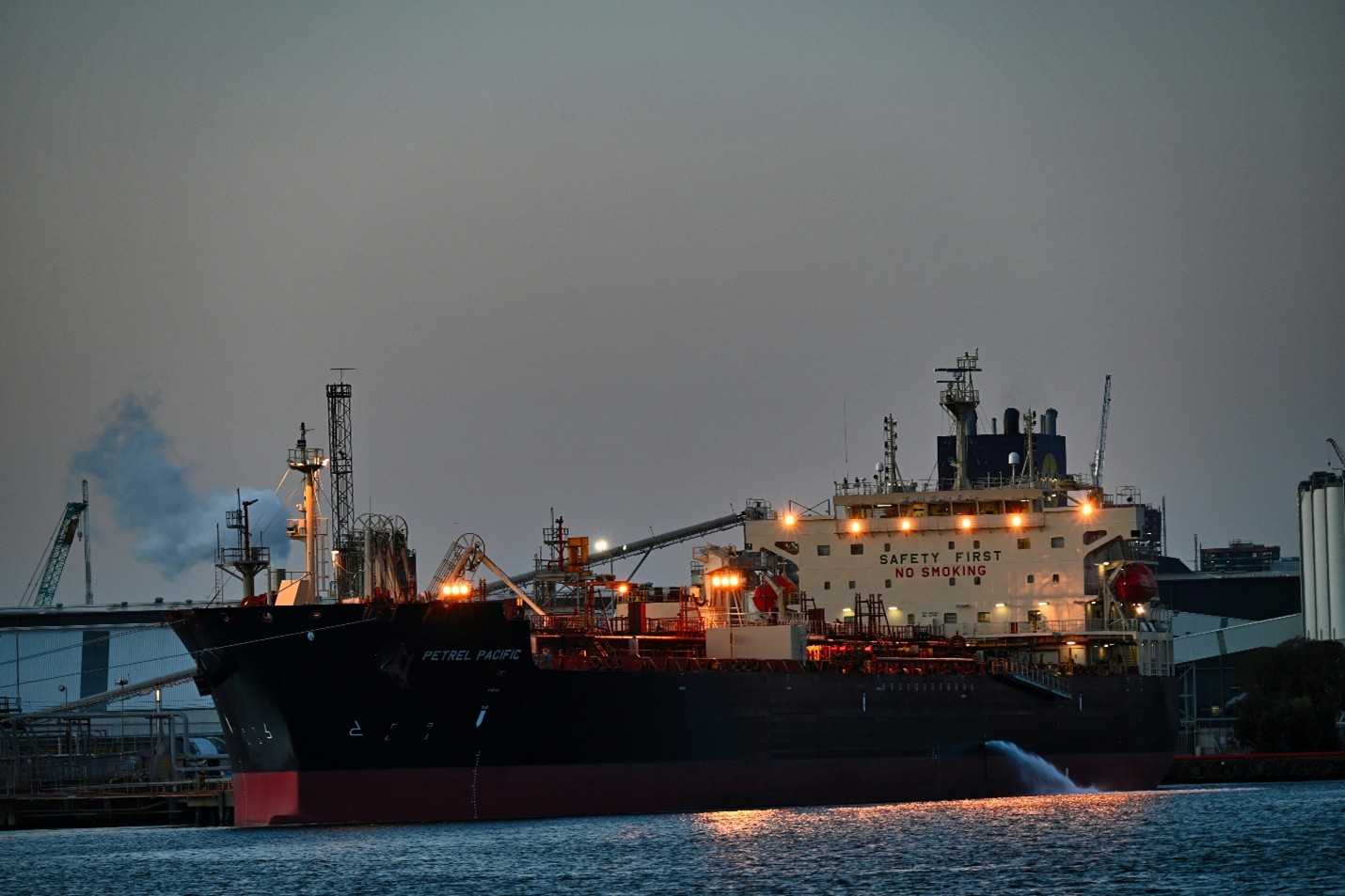
Photo courtesy of unsplash.com
Iran has been attacking neutral shipping vessels in the Strait of Hormuz.[1] The Strait of Hormuz is a narrow area which roughly 20% of the world’s crude oil is exported through and then distributed to the rest of the world.[2] These actions raise several legal questions concerning which international and maritime laws affect the Strait and reveal how these laws are designed to prevent situations such as the recent attacks on neutral shipping vessels.
Maritime law, also known as admiralty law, is the oldest legal code developed.[3] Similar to modern contract law, it is primarily concerned with increasing economic efficiency, free and uninterrupted transit, protections against piracy, and maritime worker protection.[4] One example of the latter is the U.S. Jones Act, Section 27 of the Merchant Marine Act of 1920 (P.L. 66-261), which requires vessels transporting cargo within the United States be U.S.-built, and owned and crewed by U.S. citizens.[5] The act provides a significant degree of protection for U.S. shipyards, domestic carriers, and American merchant sailors.[6]
The Strait of Hormuz is not owned by Iran; it is considered an international strait per the terms of Article 30 of UN Convention on the Law of the Sea (UNCLOS.)[7] This applies to straits between one international economy and the high seas.[8] UNCLOS is established to ensure the right of passage for all ships.[9] The logic is that when much of global trade depends on a narrow corridor, the bordering states are not allowed to use that corridor as leverage.[10] UNCLOS is not suspended even in times of war, and Iran’s actions blocking the strait violate these provisions.[11] In addition to blocking the Strait of Hormuz, it has been reported that Iran is laying naval mines. Mine placement in the Strait of Hormuz is illegal because there is no alternative convenient or commercially acceptable route available to neutral merchant shipping. This is an act that clearly violates the Hague VII Convention.[12] Iran is actively violating international law by blocking shipping routes and mine placement in the strait. However, while Iran did sign the UNCLOS in 1982, it never ratified the treaty.[13] When it signed the treaty, the Iranian government declared that certain parts of the UNCLOS, including its transit passage, were “quid pro quo” bargains for treaty parties, rather than codifications of existing customary international law.[14] Iran interprets itself as not being bound by the aforementioned “transit passage” regime.[15]
But without a clear enforcement authority it is unclear if there will be any consequences to Iran’s actions. UNCLOS is supposed to be enforced by individual countries within their territorial waters.[16] In the case of an exclusive economic zone, such as the Strait of Hormuz, enforcement is supposed to be conducted by the costal state to exercise sovereign rights for purposes like exploitation, conservation, management and exploration of natural resources present.[17] This presents a challenge as the Iranian government, who should be responsible for upholding UNCLOS, is currently violating it. Notable examples include when faced with pressure to open the strait by the G7, Iran refused to back down and told them to “come and open it then.”[18] Iran blocking the Strait of Hormuz is a primary example of what maritime and international law is designed to prevent and illustrates both the consequences of and need for a proper enforcement body for UNCLOS.
The most notable disruption from the blockage of the strait of Hormuz are the recent increase in gas prices across the U.S. Forbes reported on Friday March 6th, that the U.S. is experiencing the highest gas prices seen in 18 months.[19] More concerningly, however, is the temporary suspension of the Jones Act.[20] The Act has long been justified as protection of the U.S. maritime industry and national security.[21] A 60-day waiver has been enacted, authorizing foreign-flagged vessels to transport oil, liquefied natural gas (“LNG”), fertilizer, and coal between U.S. ports.[22] This move is designed to temporarily decrease gas prices by allowing cheaper foreign labor to transport materials within the United States. However, the Jones Act suspension will adversely affect U.S maritime workers whose jobs and wages are outsourced and underbid by this act.[23] It is also questionable how much suspending the Jones Act will reduce gas prices, as Jones’ Act tankers carry a minimal percentage of U.S. gasoline, and the majority of current Jones’ Act tanker capacity has already been committed to long term charters.[24]
It is questionable how suspending an act that protects the American maritime industry will provide long term reduction in gas prices, while the United States continues to bomb a country that so easily controls an area that 20% of the worlds crude oil production enters the international market through.
[1] https://www.justsecurity.org/133996/legal-operational-strait-hormuz-transit-passage/
[2] Id.
[3] https://lawshun.com/article/how-developed-maritime-law-created
[4] Id.
[5] https://www.congress.gov/crs-product/R45725
[6] Id.
[7] https://www.justsecurity.org/133996/legal-operational-strait-hormuz-transit-passage/
[8] https://www.un.org/depts/los/convention_agreements/texts/unclos/part3.htm
[9] Id.
[10] https://www.lawfaremedia.org/article/the-strait-of-hormuz-and-the-limits-of-maritime-law
[11] https://www.justsecurity.org/133996/legal-operational-strait-hormuz-transit-passage/
[12] https://ihl-databases.icrc.org/en/ihl-treaties/hague-conv-viii-1907
[13] https://www.lawfaremedia.org/article/the-strait-of-hormuz-and-the-limits-of-maritime-law
[14] Id.
[15] Id.
[16] https://cmlnluo.law.blog/2019/08/05/enforceability-of-unclos-in-international-maritime-law/
[17] Id.
[18] https://jang.com.pk/en/61585-come-and-open-it-iran-defies-macron-over-strait-of-hormuz-blockage-news
[19] https://www.forbes.com/sites/antoniopequenoiv/2026/03/06/gas-prices-surged-this-week-amid-iran-war-these-states-are-being-squeezed-tightest/?ctpv=searchpage
[20] https://www.jdsupra.com/legalnews/customs-and-border-protection-publishes-5287977/
[21] Id.
[22] Id.
[23] Id.
[24] Id.