By: Zoë Morse, Junior Editor
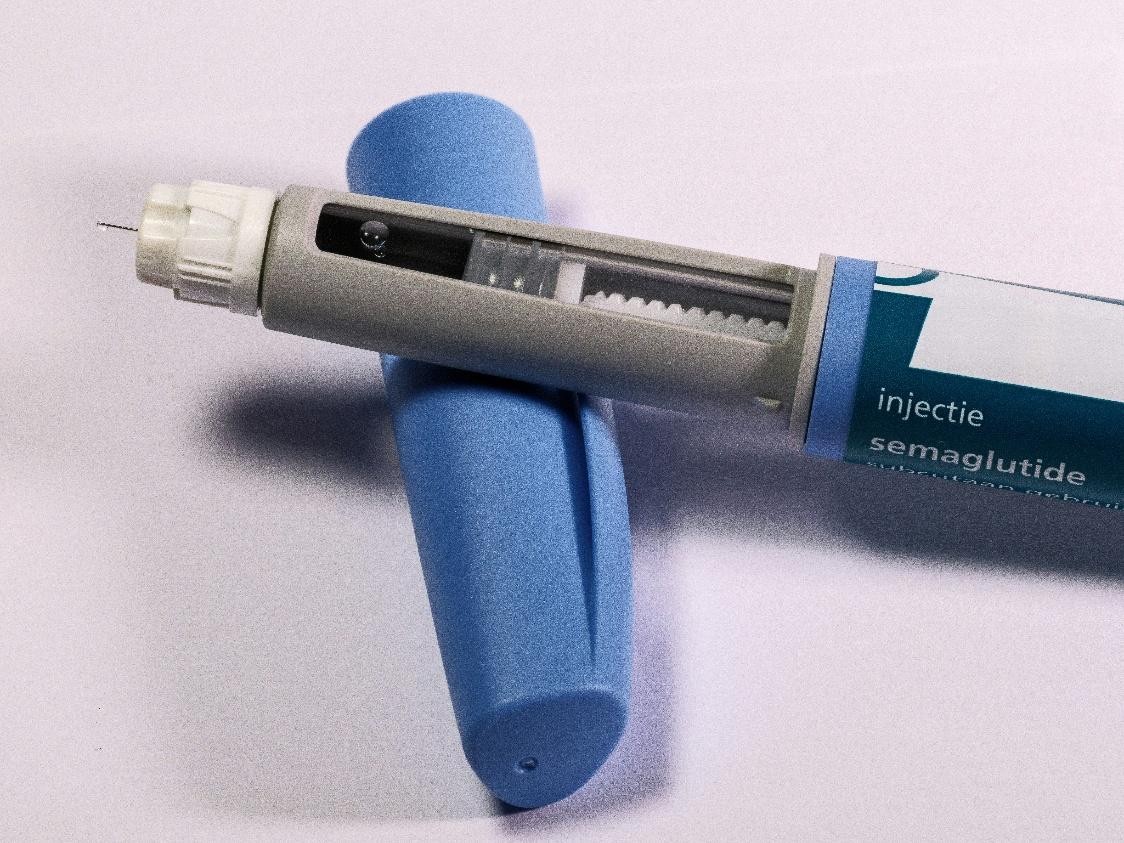
Photo courtesy of unsplash
Who wants to physically go to the doctor’s office when you can receive equivalent care right from your living room? The Covid-19 pandemic contributed to a surge in telehealth services available to patients.[1] These days, patients can receive direct care without having to leave their homes. Telehealth care can be equivalent to in-person care for both acute and chronic conditions.[2] Even now that the pandemic is over, telehealth continues to be an attractive option for people. Telehealth has become integrated into the management of many health conditions. Weight loss has joined the bandwagon of health conditions that can be managed with telehealth services.
Every few years or so a new weight loss trend seems to hit the market. Most people can understand a fad diet or exercise routine. Lately, a new trend is the use of prescription medications to assist with weight loss. Additionally, while patients could go to their doctor’s office in person to receive these medications, an easier path seems to be taking hold. An avenue being advertised in the media is the use of online platforms to gain access to unofficial versions of prescriptions that promote weight loss. While these medications have increased in popularity, controversy is beginning to take place.
This new approach to weight loss involves the use of a class of medications called GLP-1 receptor agonists. These are a class of medications that help manage glucose levels in people with Type 2 diabetes and can help treat obesity.[3] They are usually injectable medications, self-administered with a needle and syringe into the fatty tissue underneath skin.[4] The United States Food and Drug Administration (FDA) approved the first GLP-1 receptor agonist in 2005.[5] However, use of these medications should be monitored by a physician and should be only a part of a regimen to manage obesity or Type 2 diabetes. [6]
Wegovy and Zepbound are two GLP-1 agonist receptor medications that have increased in popularity.[7] While prices have decreased for these medications, they can still amount to around $500 per month for individuals without insurance.[8] Even for people with insurance, coverage for the medications are inconsistent.[9] Doctors are hoping that prices will fall more in the future.[10] Unfortunately, most state and federally funded Medicaid programs, as well as Medicare, do not provide coverage for these medications.[11] Consequently, these drugs would traditionally be difficult for some people to obtain.
As a result, consumers are turning to less expensive alternatives. These medications can be purchased through online platforms, such as Hims & Hers and Ro, with medications being delivered through the mail to customers. Hims & Hers is a publicly traded telehealth platform founded in 2017 that provides a variety of healthcare services, including prescribing medications, to their customers. [12] Care is delivered through back-and-forth messaging between the provider and patient, rather than through a direct video or telephone call.[13] By using the website, individuals can gain access to GLP-1 injections. Furthermore, individuals can receive a “compound treatment,” that claims to have the same active ingredients as Ozempic and Wegovy.[14] These compounded products have not been approved by the FDA.[15] Ro likewise uses an online platform named ro.OS to connect with patients completely remotely.[16] People can usually get a month’s supply for several hundred dollars.[17] The ease of securing these medications at a lower cost has contributed to the increase in their popularity and use.
In contrast to traditional pharmacies, compounding pharmacies use raw drug ingredients to produce customized versions of prescription medications.[18] One instance when these pharmacies may be used is when patients have allergies to certain ingredients.[19] The FDA has limited oversight of compounding pharmacies, which are primarily overseen by state authorities.[20] This begs the question of how legitimate these compounding pharmacies are and how safe their products are to their consumers. Has telemedicine gone too far with the ability to send patients medications that are not approved by the FDA through the mail?
In September of 2025, the FDA posted more than 100 letters to various online prescribing companies, including Hims & Hers. [21] In the notice was a warning to remove promotional statements containing language that claimed its products contained the same active ingredient as FDA approved drugs Wegovy and Ozempic. This is the first time the FDA is attempting to regulate these online platforms for distributing prescribed medications.[22] These platforms have long held that they are not subject to the traditional drug advertising rules as they do not manufacture the medications.[23]
Hims & Hers responded in a statement asserting that their website and advertising materials make note that compounded treatments are not approved or evaluated by the FDA.[24] The FDA does permit these “compounding” or customized production of medications when there is a shortage of the official version of an approved medication.[25] Even though the FDA recently determined that GLP-1 drugs no longer met the criteria for a shortage, the practice of producing these compounded medications are permitted when the prescription is customized for the patient. [26] This creates a loophole for the platform to allow them to continue to prescribe compounded medications. Companies have started offering “personalized,” and treatment plans for patients, allowing them to fall under the exception.
Hims and similar companies initially sold inexpensive generic versions of drugs for hair loss, erectile dysfunction, and other health issues.[27] However, the demand for medications to manage obesity opened the door to this new avenue of revenue. Are these online platforms trying to legitimately use the convenience of telehealth to provide weight loss medications and other health services at a lower cost? Or are they simply trying to escape FDA regulations to peddle products that line their pockets?
[1] Julia Shaver, The State of Telehealth Before and After the COVID-19 Pandemic, National Library of Medicine (Apr. 25, 2022), https://pmc.ncbi.nlm.nih.gov/articles/PMC9035352/.
[2] Id.
[3] Cleveland Clinic, GLP-1 Agonists, Cleveland Clinic (July 3, 2023). https://my.clevelandclinic.org/health/treatments/13901-glp-1-agonists.
[4] Id.
[5] Id.
[6] Id.
[7] Tom Murray, Wegovy and Zepbound prices fall, but access to the obesity drugs still isn’t guaranteed, AP News (July 5, 2025), https://apnews.com/article/wegovy-zepbound-obesity-drugs-coverage-access142e234c16df4443e8f66c27d01f44e2.
[8] Id.
[9] Id.
[10] Id.
[11] Id.
[12] Hims, About the Company, hims https://www.hims.com/about/the-company (last visited November, 14 2025).
[13] Id.
[14] Hims, Weight Loss, hims https://www.hims.com/weight-loss (last visited November, 13 2025).
[15] Id.
[16] Ro, Meet ro.OS, ro https://ro.co/os/ (last visited November, 11 2025).
[17] Matthew Perrone, AP News, FDA says knockoff versions of Lilly obesity drug must come off the market (Dec. 19, 2024), https://apnews.com/article/obesity-drugs-zepbound-shortage-fda-13d18b0e3e74a7f7355521bf8e38cb5b.
[18] Id.
[19] Id.
[20] Id.
[21] Matthew Perrone, FDA takes aim at Hims & Hers, weight loss drugs in new advertising blitz, AP News (Sept. 16, 2025), https://apnews.com/article/hims-drug-ads-tv-fda-rfk-9c08db3481dcfd67c433fad1ae07d941.
[22] Id.
[23] Id.
[24] Id.
[25] Id.
[26] Id.
[27] Id.