By: Olivia DuFresne, Staff Writer
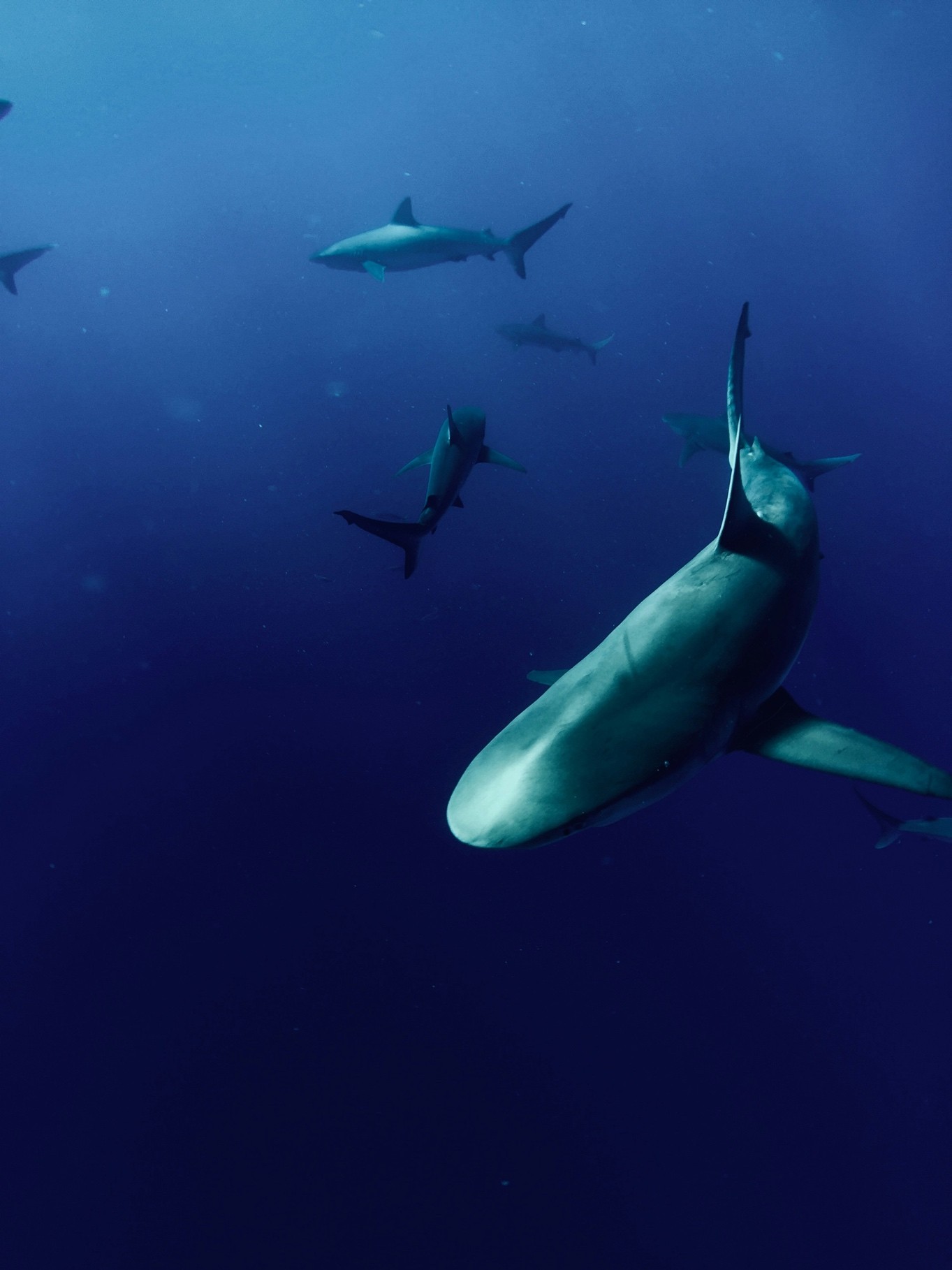
Photo courtesy of Unsplash.com
On October 31, 2022, the Center for Biological Diversity formally petitioned federal officials to protect the smalltail shark by adding the species to the endangered species list.[1] The request followed decades of steep and sustained population losses. Since 1995, the species’ numbers have declined by more than 80 percent, largely due to overfishing and incidental catch.[2] Although alarming, this decline reflects a broader global crisis facing sharks as a whole, whose populations worldwide have dropped by more than 70 percent since the 1970s, signaling widespread instability in marine ecosystems and growing conservation concern among scientists and regulators.
In response to the petition, the National Oceanic and Atmospheric Administration (NOAA) Fisheries initiated a “90-day finding” in May 2023 to evaluate whether listing the smalltail shark as endangered or threatened under the Endangered Species Act (ESA) was warranted.[3] A positive 90-day finding signifies that substantial scientific or commercial information indicates a listing may be justified and triggers a more comprehensive status review. That review must culminate in a legally required 12-month determination, in which the agency decides whether to list the species, decline listing, or delay action due to competing priorities. Such determinations are mandatory statutory obligations designed to ensure prompt conservation action when extinction risks are present.
However, the NOAA failed to meet the statutory deadline in October 2023 to publish the required 12-month finding.[4] Because the timeline is legally enforceable, missing the deadline constituted a failure to comply with the agency’s duties under the ESA. As a result, the smalltail shark remained designated only as a “candidate” species, a classification that acknowledges risk but provides no binding protections.[5] The Center for Biological Diversity argued that this delay left the species exposed to continuing threats without the safeguards Congress intended, allowing population declines to persist during a critical period for recovery.[6]
Delays in federal protection can have ripple effects that extend well beyond a single species. When the NOAA does not finalize an endangered or threatened listing, the shark receives no enforceable limits on fishing, no critical habitat designation, and no recovery planning. Because sharks function as mid-level and apex predators, they play a vital ecological role in maintaining balanced marine food webs.[7] Their loss can trigger cascading effects, allowing prey populations to expand unchecked, degrading habitats such as coral reefs and seagrass beds, and ultimately reducing biodiversity and overall ecosystem stability. In this way, the continued decline of the smalltail shark threatens not only the species itself but also the health and resilience of the broader marine environment.
In February 2026, the Center for Biological Diversity filed suit seeking a court order compelling NOAA to issue the long-overdue determination.[8] The litigation resulted in a binding timeline requiring the agency to complete its decision by August 12, 2026, thereby restoring procedural accountability and moving the listing process forward.[9]
The need for ESA protection is particularly acute given the broader pressures facing sharks globally, including the international shark fin trade.[10] Since 1950, global shark catches reported to the Food and Agriculture Organization has tripled, approaching nearly one million tons annually, with total estimated global catch and mortality—including reported and unreported harvest, finning, and discards—reaching approximately 1.4 million metric tons in the 2000s.[11] These figures translate to an estimated 100 million sharks killed each year, with some estimates reaching as high as 273 million, underscoring the scale of exploitation confronting shark populations worldwide.[12] Recognizing this heightened risk of extinction, the International Union for Conservation of Nature classified the smalltail shark as critically endangered in 2020.[13] A formal ESA listing would therefore provide essential domestic protections, including prohibitions on take, restrictions on import and export of the species or its parts, and the designation of critical habitat within United States waters, while also strengthening international conservation efforts.[14] Collectively, these measures would offer the legal and regulatory framework necessary to halt further decline and promote recovery of the smalltail shark.
[1] https://media.fisheries.noaa.gov/2022-12/Smalltail-Shark-Listing-Petition-2022-10-31%20-%20508%20compliant.pdf
[2] Id.
[3] https://www.chron.com/gulf-coast/article/smalltail-shark-endangered-21333683.php
[4] https://www.chron.com/gulf-coast/article/smalltail-shark-endangered-21333683.php
[5] https://media.fisheries.noaa.gov/2022-12/Smalltail-Shark-Listing-Petition-2022-10-31%20-%20508%20compliant.pdf
[6] Id.
[7] Id.
[8] https://www.msn.com/en-us/news/us/fast-dying-smalltail-shark-needs-protections-say-advocates/ar-AA1VRzqw
[9] https://www.courthousenews.com/conservationists-secure-federal-deadline-on-protections-for-vanishing-shark-species/
[10] https://media.fisheries.noaa.gov/2022-12/Smalltail-Shark-Listing-Petition-2022-10-31%20-%20508%20compliant.pdf
[11] https://media.fisheries.noaa.gov/2022-12/Smalltail-Shark-Listing-Petition-2022-10-31%20-%20508%20compliant.pdf
[12] Id.
[13] Id.
[14] Id.