By Cassidy Crawford, Staff Writer
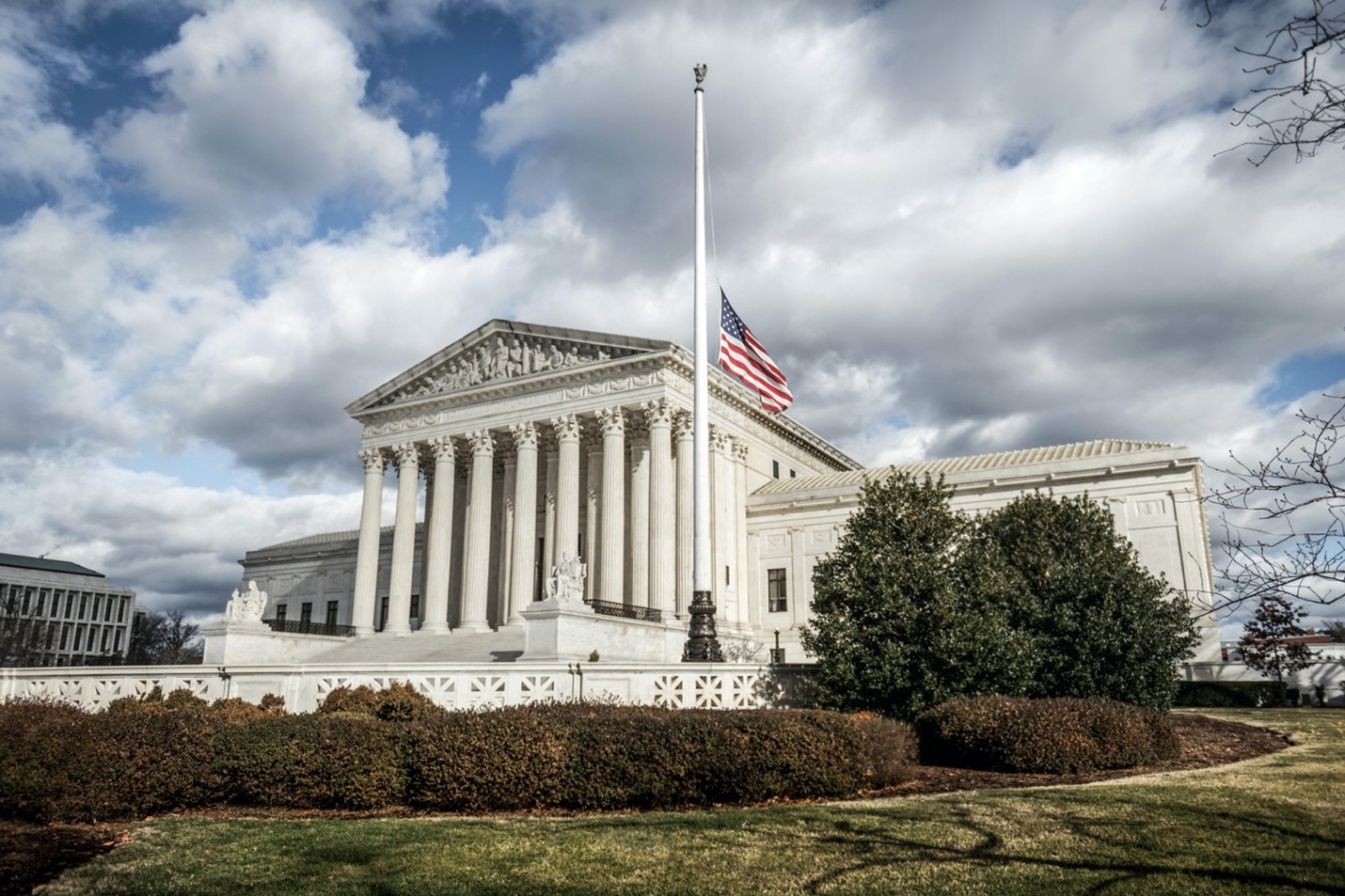
Photo Courtesy of Unsplash
In many government positions, we see term limits imposed or set terms that require re-election when the term has expired. Some examples include the President of the United States, a position that can be held no more than twice by one person (with differing rules if a person completed someone else’s term).[1] Members of Congress also have to campaign for re-election when their term has ended (six-year terms for Senators and 2-year terms for U.S. Representatives), though there is no limit on how many terms they can serve. [2] The term limits and guidelines become looser when we enter the area of the judiciary in our government, specifically the Supreme Court of the United States. There are no limits on the U.S. Supreme Court justices’ tenure, with the average term from 1993-2024 reaching over 28 years.[3] The Supreme Court stands almost alone in this sense among the high courts and even within our own country.[4] As of 2024, thirty-one states and the District of Columbia had some form of mandatory retirement for justices.[5] Terms for high court justices ranging from six to fourteen years were also established in almost all states.[6]
There have been multiple instances in our history where Supreme Court term limits have been proposed in the House of Representatives, most recently in May of 2025.[7] The Supreme Court Tenure Establishment and Retirement Modernization (TERM) Act was reintroduced by Congressman Hank Johnson (GA-04) in an effort to establish eighteen years of regular active service as a term limit for Supreme Court justices and create a regularized appointment process.[8] At the conclusion of this eighteen-year term, the justice would retain the office and assume senior status.[9] This means that they would continue to serve as a senior federal judge under Article III of the Constitution, but would be assigned to a lower federal court and would still be available to perform any work that the active justices give them.[10] This proposed term limit is structured to align with the Constitution, which provides in Article III that there will be judicial tenure for a justice during “good behavior”.[11] This has been understood to mean life tenure, and requiring that a justice not leave judicial service entirely avoids any constitutional problem.[12] A new justice would also be appointed every two years (the first and third years following a presidential election).[13]
There are many arguments as to the advantages and disadvantages of this system. One argument against term limits is that they would be likely to lead to a “substantial detrimental effect on doctrinal stability”.[14] This argument comes from the idea that a constantly changing court might make sudden changes in doctrine while the current slowly moving court creates longevity and stability, changing doctrine incrementally.[15] Another argument against the eighteen-year term limit is that each justice will know exactly how long his counterparts will remain on the Court.[16] This could lead to issues with justices choosing to defer controversial decisions for a less hostile court or feel pressured to make decisions with the current court.[17] An advantage of the eighteen-year term limit is that it would allow for new thinking in this country’s highest Court.[18] Eighteen years is the historical median for justices and is argued to be enough time for a justice to learn the ins and outs of the Court and to have an impact while still allowing for fresh ideas and understanding of our society to enter the Court every two years.[19] There is also the argument in favor of term limits that regular appointments and the knowledge that any appointment will last a fixed eighteen years will help to depoliticize the process of appointing Supreme Court justices.[20] While these arguments surrounding term limits are had, the TERM Act still has a way to go before it becomes law as no decision has been made in the House on this bill yet.[21]
[1] https://constitution.congress.gov/constitution/amendment-22/
[2] https://www.termlimits.com/frequently-asked-questions/
[3] https://www.brennancenter.org/our-work/analysis-opinion/life-tenure-us-supreme-court-justices-global-oddity-clear-costs
[4] https://www.brennancenter.org/our-work/analysis-opinion/constitution-allows-term-limited-supreme-court-justices
[5] https://www.brennancenter.org/our-work/analysis-opinion/constitution-allows-term-limited-supreme-court-justices
[6] https://www.brennancenter.org/our-work/analysis-opinion/constitution-allows-term-limited-supreme-court-justices
[7] https://hankjohnson.house.gov/media-center/press-releases/rep-johnson-re-introduces-supreme-court-justice-term-limit-measure-0
[8] https://hankjohnson.house.gov/media-center/press-releases/rep-johnson-re-introduces-supreme-court-justice-term-limit-measure-0
[9] https://hankjohnson.house.gov/media-center/press-releases/rep-johnson-re-introduces-supreme-court-justice-term-limit-measure-0
[10] https://www.brennancenter.org/our-work/analysis-opinion/why-term-limits-supreme-court-justices-make-sense
[11] https://www.brennancenter.org/our-work/analysis-opinion/constitution-allows-term-limited-supreme-court-justices
[12] https://www.brennancenter.org/our-work/analysis-opinion/constitution-allows-term-limited-supreme-court-justices
[13] https://hankjohnson.house.gov/media-center/press-releases/rep-johnson-re-introduces-supreme-court-justice-term-limit-measure-0
[14] https://scholarship.law.vanderbilt.edu/faculty-publications/1091/
[15] https://scholarship.law.vanderbilt.edu/faculty-publications/1091/
[16] https://scholarship.law.pitt.edu/fac_book-chapters/36/
[17] https://scholarship.law.pitt.edu/fac_book-chapters/36/
[18] https://www.brennancenter.org/our-work/analysis-opinion/why-term-limits-supreme-court-justices-make-sense
[19] https://www.brennancenter.org/our-work/analysis-opinion/why-term-limits-supreme-court-justices-make-sense
[20] https://www.brennancenter.org/our-work/analysis-opinion/why-term-limits-supreme-court-justices-make-sense
[21] https://www.congress.gov/bill/119th-congress/house-bill/3544/all-actions?s=2&r=5&q=%7B%22search%22%3A%22Supreme+Court+TERM+Act%22%7D