By: Bianca Ortalano, Editor-in-Chief
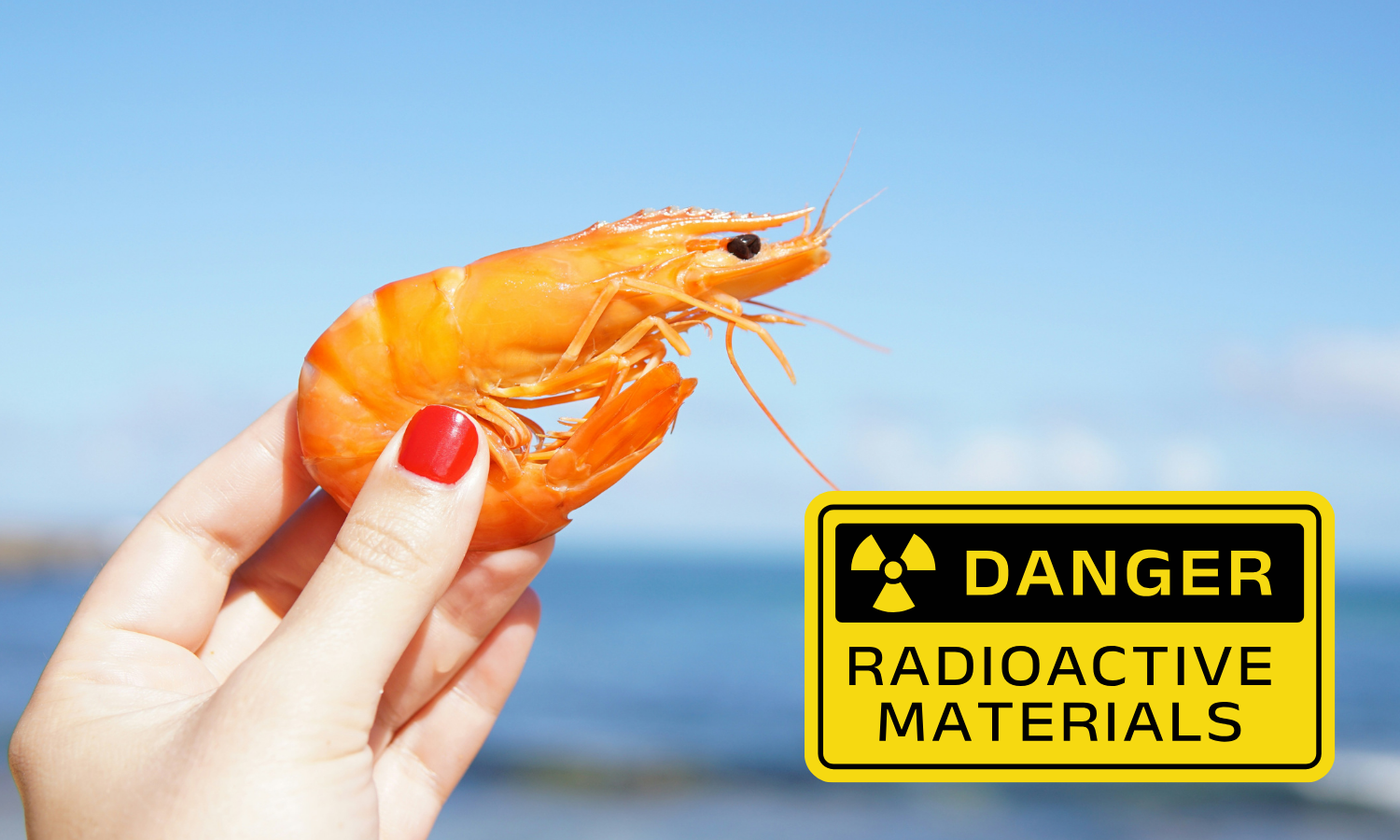
Picture this, you turn on the news and expect to see the weather forecast or an anchor reporting that a crime occurred in your neighborhood. Instead, you see “More shrimp recalled due to possible radioactive contamination.”1 You might think that radioactive shrimp would make for a great superhero, but unfortunately fiction has turned into reality as several brands of frozen shrimp have been named in a recall by the Food and Drug Administration (“FDA”) due to radioactive contamination.2 The FDA commenced an investigation looking into the shrimp after becoming aware of reports from the U.S. Customs & Border Protection of Cesium-137 (“Cs-137”) contamination in shipping containers and frozen shrimp products at four different U.S ports.3 The affected products appear to have been prepared, packed, or held under insanitary conditions.4 The presence of Cs-137 in these shrimp products is concerning due to the potential health risks if a consumer is exposed.5
Although Cs-137 is a man-made radioisotope that can be found in trace amounts in the environment due to its popularity, an unexpected finding of Cs-137 is cause for alarm according to the FDA who regularly monitors food for radioisotopes that are not normally present.6 The FDA currently classifies a finding of 1200 Bq/kg of Cs-137 to be cause for intervention, but long term exposure to low doses leads to an elevated risk of cancer.7 That is why the FDA chose to investigate even though the initial detained shipment of affected shrimp tested at only 68 Bq/kg.8 Exposure to Cs-137 may result in acute radiation syndrome “which includes nausea, vomiting, diarrhea, bleeding, coma, and even death in cases of very high exposures.”9 In recognizing these dangers, the federal government has previously introduced recommendations regarding Cs-137 exposure to protect human health through the National Institute for Occupational Safety and Health, the Environmental Protection Agency, and the United States Nuclear Regulatory Commission.10
As of September 25, 2025, eleven companies and brands have become involved in the FDA’s recall for contaminated shrimp.11 Although one company in particular was found to have had contaminated shrimp—PT. Bahari Makmur Sejati (doing business as BMS Foods)—other companies have voluntarily recalled their products to be cautious.12 Some of those brands include Walmart’s Great Value and Kroger but there is no need to avoid the impacted brands entirely.13 The states impacted by these recalls include: Alabama, Arizona, California, Colorado, Connecticut, Florida, Georgia, Hawaii, Idaho, Indiana, Kansas, Kentucky, Louisiana, Massachusetts, Michigan, Minnesota, Missouri, Montana, Nebraska, Nevada, New Jersey, New Mexico, New York, Ohio, Oregon, Pennsylvania, Rhode Island, Tennessee, Texas, Utah, Virginia, Washington, Wisconsin, and Wyoming.14 However, the initial shipment that triggered the FDA’s investigation was removed and did not enter the U.S. marketplace.15 Out of an abundance of caution and to ensure the safety of consumers, the FDA still recommends that anyone who purchased one of the impacted lots of raw or cooked frozen shrimp throw it away.16 Consumers may still be left wondering, “what about the stores selling me this shrimp, do they face any consequences if I get sick after buying food that was subject to a recall?” The answer is yes, there are consequences and legal recourse available to consumers who fall ill after buying recalled food products.17
3 Pa.C.S. § 5725 is a Pennsylvania statute that outlines criminal and civil penalties for violations of food safety regulations.18 There are different levels of penalties depending on whether this is a party’s first offense and how many violations the party has been responsible for in the past, if any at all.19 Some civil penalties may even be as high as $10,000 per offense.20 In determining which penalty to impose the statute considers the gravity of the violation as well as whether there was any harm done to human health.21 Furthermore, under 3 Pa.C.S. § 5726 the secretary of agriculture may allow any adulteration or misbranding to be cured by the owner so long as the issue is one that could be successfully corrected by a proper label or reprocessing.22 However, if the food is found to be unfit for human consumption and cannot be cured then it shall be destroyed by the secretary of agriculture.23 While these statutes are utilized by the department of agriculture, civil suits enacted by an injured plaintiff fall under different causes of action. These causes of action can include strict liability, breach of implied warranty, and negligence.
Public policy and public health demands that food vendors carry a heavy burden of ensuring that their food products are fit for human consumption.24 The Pennsylvania Supreme Court has held that when articles of food are sold there is an implied warranty that the food is fit for the purposes intended regardless of the seller’s knowledge of any defects.25 If a consumer purchases food that is not fit for human consumption by means of disease or other defect the vendor would be liable for breaching the implied warranty.26 If a breach of warranty is found the damages that a consumer would be entitled to is “the loss directly and naturally resulting…from the breach of warranty.”27 A claim under strict liability extends a consumer’s reach by allowing them to go after all sellers in the distribution chain, including retailers for any defective product that caused harm.28 Strict liability does not require any finding of negligence to hold a seller responsible for providing a consumer with a defective product.29
A claim of negligence may seem more difficult to prevail under compared to strict liability but it can help a plaintiff target a specific point in the distribution chain. In one shocking case after purchasing an ice cream cone from a retail dealer the plaintiff found the taste to be wrong and discovered that she had taken the hindquarters and tail of a mouse into her mouth.30 The plaintiff became violently ill for several days afterwards.31 There was evidence that the mouse was already in the mold when it was sent to the retail dealer by the defendant, which means that this case then turned on whether the defendant exercised reasonable care in preparing the ice cream.32 Regardless of the cause of action a consumer uses it is imperative that the plaintiff be prepared for the defendant to fight back. A defendant may claim that the consumer failed to prevent spoilage of the product, cooked or handled the product incorrectly, or even that the harm came from another source.33 While there is legal recourse available, it can be tricky for consumers to prevail due to other variables and uncertainties that exist once a product leaves the supplier whether that be a retail store, vendor, or manufacturer.
Food regulations put in place by the FDA and other regulatory bodies can only do so much to protect the public. Thankfully there have been no reported illnesses connected to this incident, but recalled products can slip by unnoticed or be left on the shelves when profit means more than safety.34 Consumers are often the last line of defense when they need to take matters into their own hands. With the Trump administration rolling back regulations and protections consumers may increasingly have to rely on legal remedies after exposure rather than preventative safeguards.35 So keep an eye out for any glowing shrimp that may make it into your cart, you may end up needing to prove that Cesium-137 was the secret ingredient in your seafood special.
- Youri Benadjaoud & Meredith Deliso, More shrimp recalled due to possible radioactive contamination, FDA says, abc news (Aug. 21, 2025, 8:41 PM), https://abcnews.go.com/US/shrimp-recalled-due-to-possible-radioactive-contamination-fda/story?id=124866401 ↩︎
- Id. ↩︎
- FDA, 2025 Recalls of Frozen Shrimp Products Associated with Cesium-137 Contamination from PT. Bahari Makmur Sejati Due to Potential Safety Concerns, U.S. Food & Drug Administration (Sept. 25, 2025), https://www.fda.gov/safety/major-product-recalls/2025-recalls-frozen-shrimp-products-associated-cesium-137-contamination-pt-bahari-makmur-sejati-due; FDA, FDA Advises Public Not to Eat, Sell, or Serve Certain Imported Frozen Shrimp from an Indonesian Firm, U.S. Food & Drug Administration (Aug. 19, 2025), https://www.fda.gov/food/alerts-advisories-safety-information/fda-advises-public-not-eat-sell-or-serve-certain-imported-frozen-shrimp-indonesian-firm ↩︎
- FDA, FDA Advises Public Not to Eat, Sell, or Serve Certain Imported Frozen Shrimp from an Indonesian Firm, U.S. Food & Drug Administration (Aug. 19, 2025), https://www.fda.gov/food/alerts-advisories-safety-information/fda-advises-public-not-eat-sell-or-serve-certain-imported-frozen-shrimp-indonesian-firm ↩︎
- Id. ↩︎
- Id. ↩︎
- Id. ↩︎
- Id. ↩︎
- Division of Toxicology, Division of Toxicology ToxFAQsTM, Centers for Disease Control and Prevention’s Agency for Toxic Substances and Disease Registry (Apr. 2004), https://www.atsdr.cdc.gov/toxfaqs/tfacts157.pdf ↩︎
- Id. ↩︎
- FDA, 2025 Recalls of Frozen Shrimp Products Associated with Cesium-137 Contamination from PT. Bahari Makmur Sejati Due to Potential Safety Concerns, U.S. Food & Drug Administration (Sept. 25, 2025), https://www.fda.gov/safety/major-product-recalls/2025-recalls-frozen-shrimp-products-associated-cesium-137-contamination-pt-bahari-makmur-sejati-due ↩︎
- FDA, FDA Advises Public Not to Eat, Sell, or Serve Certain Imported Frozen Shrimp from an Indonesian Firm, U.S. Food & Drug Administration (Aug. 19, 2025), https://www.fda.gov/food/alerts-advisories-safety-information/fda-advises-public-not-eat-sell-or-serve-certain-imported-frozen-shrimp-indonesian-firm; FDA, Updated Release: Southwind Foods, LLC Recalls Frozen Shrimp Because of Possible Health Risk, U.S. Food & Drug Administration (Sept. 23, 2025), https://www.fda.gov/safety/recalls-market-withdrawals-safety-alerts/updated-release-southwind-foods-llc-recalls-frozen-shrimp-because-possible-health-risk-0 ↩︎
- FDA, 2025 Recalls of Frozen Shrimp Products Associated with Cesium-137 Contamination from PT. Bahari Makmur Sejati Due to Potential Safety Concerns, U.S. Food & Drug Administration (Sept. 25, 2025), https://www.fda.gov/safety/major-product-recalls/2025-recalls-frozen-shrimp-products-associated-cesium-137-contamination-pt-bahari-makmur-sejati-due ↩︎
- FDA, Updated Release: Southwind Foods, LLC Recalls Frozen Shrimp Because of Possible Health Risk, U.S. Food & Drug Administration (Sept. 23, 2025), https://www.fda.gov/safety/recalls-market-withdrawals-safety-alerts/updated-release-southwind-foods-llc-recalls-frozen-shrimp-because-possible-health-risk-0 ↩︎
- FDA, FDA Advises Public Not to Eat, Sell, or Serve Certain Imported Frozen Shrimp from an Indonesian Firm, U.S. Food & Drug Administration (Aug. 19, 2025), https://www.fda.gov/food/alerts-advisories-safety-information/fda-advises-public-not-eat-sell-or-serve-certain-imported-frozen-shrimp-indonesian-firm ↩︎
- Id. ↩︎
- Rodman Law Office, What Are Your Rights as a Consumer After a Product Recall?, Rodman Law Office (Sept. 11, 2025), https://www.rodmanlawoffice.com/blog/what-are-your-rights-as-a-consumer-after-a-product-recall/; sedgwick, Buyer (and seller) beware of recalled items, sedgwick (2025), https://www.sedgwick.com/blog/buyer-and-seller-beware-of-recalled-items/ ↩︎
- 3 Pa. Cons. Stat. Ann. § 5725 (LexisNexis) ↩︎
- Id. ↩︎
- Id. ↩︎
- Id. ↩︎
- Id. ↩︎
- Id. ↩︎
- West v. Katsafanas, 162 A. 685, 687 (Pa. Super. Ct. 1932). ↩︎
- West v. Katsafanas, 162 A. 685, 687 (Pa. Super. Ct. 1932) (citing Catani v. Swift & Co., 95 A. 931 (Pa. 1915)). ↩︎
- West v. Katsafanas, 162 A. 685, 687 (Pa. Super. Ct. 1932). ↩︎
- Id. ↩︎
- Tincher v. Omega Flex, 104 A.3d 328, 402 (Pa. 2014). ↩︎
- Id. at 339. ↩︎
- Menaker v. Supplee-Wills-Jones Milk Co., 189 A. 714, 715 (Pa. Super. Ct. 1937). ↩︎
- Id. ↩︎
- Id. ↩︎
- See generally, Adams v. Scheib, 184 A.2d 700, 704 (Pa. 1962) (explaining how the plaintiffs presented evidence to rebut any claim that the defendant’s product was not the cause of plaintiffs’ harm). ↩︎
- FDA, Aquastar (USA) Corp Recalls Shrimp Because of Possible Health Risk, U.S. Food & Drug Administration (Oct. 17, 2025), https://www.fda.gov/safety/recalls-market-withdrawals-safety-alerts/aquastar-usa-corp-recalls-shrimp-because-possible-health-risk ↩︎
- FDA, FDA to Revoke 52 Obsolete Standards of Identity for Food Products, U.S. Food & Drug Administration (July 16, 2025), https://www.fda.gov/news-events/press-announcements/fda-revoke-52-obsolete-standards-identity-food-products ↩︎